

Jiangxi Phenix Optical Technology Co., Ltd. Is the first listed company in the Chinese optical industry (SSE code: 600071), which is Successfully listed on the Shanghai Stock Exchange in 1997. It covers an area of about 333,000㎡ and employees about 3300 people.
We offer exclusive services you can't find with other companies. We have developed a unique service system designed to assist you in building your own Microscopes And of course our team members are always standing by to help you, Chat, Phone, or Email.
Why Choose Us
Professional Team
We offer exclusive services you can't find with other companies. We have developed a unique service system designed to assist you in building your own Microscopes And of course our team members are always standing by to help you, Chat, Phone, or Email.
Factory
Jiangxi Phenix Optical Technology Co., Ltd. Is the first listed company in the Chinese optical industry (SSE code: 600071), which is Successfully listed on the Shanghai Stock Exchange in 1997. It covers an area of about 333,000㎡ and employees about 3300 people.
Our Certificate
We always feel that all success of our company is directly related to the quality of the products we offer. They meet the highest quality requirements as stipulated in ISO9001, ISO14001, ISO45001 and SGS authentication and our stringent quality control system.
Production Equipment
We have a huge production workshop and production equipment, under the premise of ensuring quality can quickly complete the order production.

The student teaching microscope leads the children to discover the wonders of the microcosm, explore nature, and raise awareness of scientific knowledge.

The T03-A mini toy microscope is designed with ergonomics, and the whole machine has smooth lines, beautiful appearance and light structure.

Professional Biological Microscope
The professional biological microscope can be used in higher education, clinical diagnosis, scientific research, laboratory and other high-end applications.

BMC100 intelligent integrated LCD digital biological microscope adopts ergonomic design, the whole machine has smooth lines, beautiful appearance, and has an excellent optical system, the image is clearer, and it is easy to observe and use.

The BMC50 portbale student biological microscope can be used for teaching and research of biology, pathology and bacteriology in universities and laboratories.

Professional Compound Microscope
PH100 series laboratory professional compound microscope can be conveniently equipped with photography, video, digital photography, professional fluorescence, professional polarization, phase contrast, dark field and other accessories, is the ideal instrument for microscopic biological observation.

Binocular Biological Microscope
This binocular biological microscope can be used for interest cultivation, teaching demonstration, animal husbandry, biochemical experiments, blood testing and quarantine inspection.

The PH20 series biological portable beginner microscopes recommended by the new curriculum standards, are very suitable for observing biological slices and specimens in elementary and middle schools.

Trinocular Biological Microscope
The trinocular biological microscope can be used for pathology analysis of urine and live blood, vet , and can also be used for teaching research and scientific research analysis of biology and bacteriology in middle and higher education institutions and laboratories.
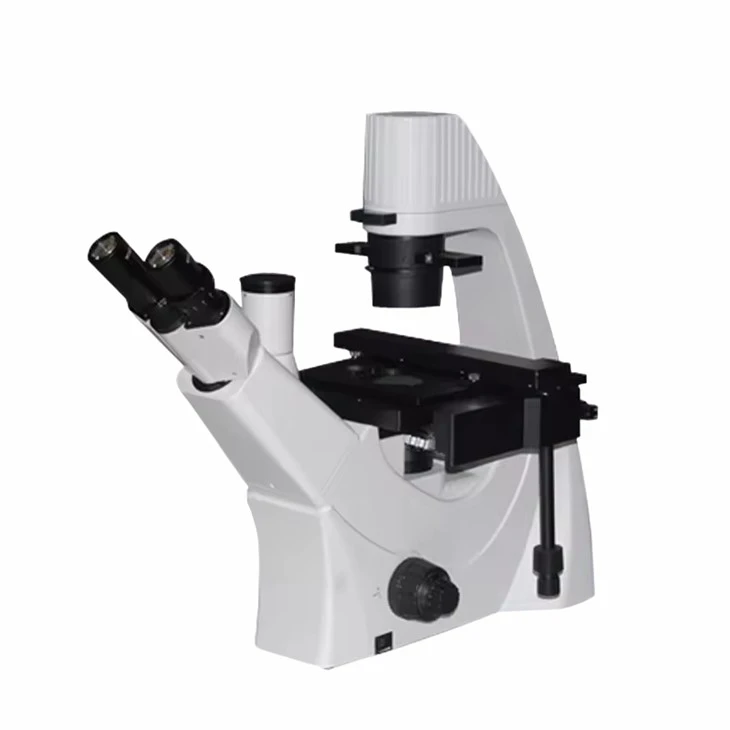
The inverted biological microscope was developed for observations of living cells (cultured cells). Cells targeted for observation are cultured in a Carrel flask or Petri dish. The use of conventional upright microscopes presents a number of problems, such as the objective lens dipping into the culture fluid, limitations on the specimen vessel used, difficulties in adjusting the phase contrast, and the image getting out of focus when observed over long time periods. The inverted biological microscope (tissue culture microscope) was developed to help solve these problems. The optical technology for inverted microscopes had already been developed for metallurgical applications.
Inverted biological microscope design extends the benefits of the light microscope that enable to observe micro-organisms in a large container under more natural conditions.inverted biological microscope are best suited for the large specimens such as tissue cultures, precipitates, sediment and reactions. Likewise, the sample life can be extended because the specimen is eventually protected from the light.
Benefits of Inverted Biological Microscope
Enhanced Visibility for Live Cell Imaging
One of the most significant advantages of an inverted biological microscope is its ability to provide clear, detailed images of live cells and tissues. Unlike traditional upright microscopes, the inverted design allows researchers to observe specimens from the bottom, making it ideal for studying cells in culture dishes or flasks. This is particularly beneficial for monitoring cell growth, behavior, and interactions in real-time.
Versatility in Sample Handling
Inverted biological microscope are designed to accommodate larger and more diverse samples. Researchers can easily observe specimens in various containers, such as Petri dishes, multi-well plates, and flasks, without the need for transferring or manipulating the sample. This versatility is crucial for experiments that require continuous observation over extended periods.
Compatibility with Advanced Imaging Techniques
Inverted biological microscope from are often equipped with features that support advanced imaging techniques, such as fluorescence microscopy, phase contrast, and differential interference contrast (DIC). These capabilities enable researchers to visualize specific cellular components, track dynamic processes, and obtain high-contrast images of transparent specimens.
Streamlined Workflow in Clinical and Laboratory Settings
In medical and health institutions, as well as in research laboratories, the inverted biological microscope streamlines workflow by allowing for rapid and efficient examination of samples. Its ease of use and flexibility in accommodating different sample types make it an ideal tool for routine medical inspections, clinical experiments, and diagnostic procedures.
Integration with Digital Imaging Systems
Many modern inverted biological microscope, like those offered by Zinscien Technology, can be integrated with digital imaging systems. This integration facilitates the capture, storage, and analysis of images, enabling researchers to document their findings, share results with colleagues, and conduct quantitative analyses with greater accuracy.
Durability and Low Maintenance
Inverted biological microscopes are built to withstand the demands of frequent use in busy research environments. Their durable construction and low maintenance requirements ensure long-term reliability and performance, making them a cost-effective investment for research institutions and laboratories.
Type of Inverted Biological Microscope
Stereo Microscopes
Stereo microscopes are used to examine a few different samples that you'd be able to hold right in your hand. A stereo microscope provides the user with a 3D image, or "stereo" image, and will usually provide magnification between 10x – 40x. The stereo microscope is used within manufacturing, quality control, science experiments, dissection experiments, and many more. A stereo microscope usually provides both transmitted and reflected illumination and could be used to view a sample that won't allow light to pass through it.
Compound Microscope
A compound microscope might also be labeled as a biological microscope. Compound microscopes are used in laboratories, wastewater treatment plants, schools, and more. Samples viewed under a compound microscope have to be prepared on a microscope slide using a coverslip to help flatten the sample. Students will usually view prepared slides under the microscope to help save time by eliminating the entire slide preparation process. The compound microscope could be used to view many samples, some of which include cheek and blood cells, bacteria, tissue, algae, and thin sections of organs. Compound microscopes are used primarily to view samples that can't be seen with the naked eye.
Metallurgical Inverted Microscopes
Metallurgical inverted microscopes are used to view metal or solid objects that don't allow light to pass through them and are too large to place under an upright metallurgical microscope. Metallurgical microscopes provide room for micromanipulation applications where space for a manipulator mechanism or tool is required.
Cell Biology and Live Cell Imaging: Inverted microscopes are extensively used in cell biology to study the behavior, morphology, and interactions of living cells in culture. Researchers can observe cell growth, division, migration, and responses to various stimuli in real-time, which provides valuable insights into cellular processes and functions.
Tissue Culture: Inverted microscopes are crucial for maintaining and studying tissue cultures. They enable researchers to monitor the development and health of tissue samples, making them essential tools in fields such as regenerative medicine and cancer research.
Microorganism Studies
In microbiology, inverted microscopes help researchers examine microorganisms like bacteria, yeast, and algae in liquid environments. These microscopes are used to study microbial growth, behavior, and interactions under controlled conditions.
Cytology and Histology
Inverted microscopes aid in the analysis of cells and tissues for diagnostic purposes. They are used in clinical labs to study cytology samples (individual cells) and histology samples (tissues) for pathological assessments.
Materials Science
Inverted microscopes are used to study the microstructure and surface characteristics of materials such as metals, polymers, and ceramics. They help researchers understand material properties, defects, and interactions.
Inverted Microscopes have the light source and condenser above the stage, rather than beneath, while the objective lenses are found beneath the stage. On a compound high power upright microscope, the light source and condenser are beneath the stage, while the objective lenses are above the stage.
Objectives: The objectives provide magnification for viewing specimens. Total microscope magnification is a combination of the objective power and the eyepiece magnification. For example, if you are using a 10x objective and WF10x eyepieces, your total magnification is 100x.
Coarse & Fine Focusing: Allows you to fine-tune focusing for a crisp, clear image when looking through the eyepieces.
Trinocular Port for Camera: A port where either a digital SLR camera can be adapted, or a microscope camera, using a C-Mount Adapter.
Eyepiece with Diopter: The eyepieces are used to view the microscopic image. The diopter allows correction of dioptric differences between both eyes.


Long Working Distance Condenser: A condenser that has a longer working distance, allowing for larger specimens to be placed under the microscope. Working distance is the amount of space that must be between the specimen and the objective lens in order for the image to be in focus.
Phase Slider: Used to view items with phase contrast objectives.
Filter Holder: Filters (such as a daylight filter or a blue filter) are often used when capturing digital images to prevent hotspots, or to balance out colors for identification of different specimens.
Iris Diaphragm: Part of the condenser that helps to focus light on the specimen, the iris diaphragm controls the diameter of the light that passes through the condenser.
Maintaining an Inverted Microscope
To ensure that an inverted microscope continues to function at its peak, a regimen of consistent maintenance is crucial. This not only prevents the most common issues but also sustains the instrument's ability to produce high-quality images.
Daily Cleaning
Each day's end should see the microscope's surfaces gently cleared of any accumulated dust and potential spills using a soft, lint-free cloth. Particular care is needed when cleaning the objective lenses and eyepieces. A piece of lens paper, slightly dampened with a specialized cleaning solution, is ideal for this task. It is important to avoid direct contact with the glass surfaces, as natural oils and grime from hands can be detrimental to the delicate coatings.
Optical Components Care
The objective lenses demand scrupulous attention. Should immersion oil be used, it must be wiped away promptly after each use to avert any hardening that could harm the lens or the specimen. It's also vital to ensure that any moisture is removed from the optical elements to maintain their pristine condition and prevent the growth of mildew.
Mechanical Systems Maintenance
The mechanical components, including focus knobs and stage controls, may require occasional lubrication. The key is to select a lubricant that neither attracts dust nor deteriorates with time. The microscope's manufacturer can often recommend appropriate products.
Electrical Systems
Inspect the electrical parts, such as bulbs, fuses, and wiring, for any signs of wear or potential damage. Replacements should be made with precision, adhering strictly to the manufacturer's guidelines to circumvent any electrical risks.
Calibratio
The microscope should undergo regular calibration to ensure the stage's movements are accurate and the optics are properly aligned. Inaccuracies here can lead to flawed measurements and compromised image quality. For high-end imaging systems, it may be prudent to have a trained technician perform this calibration.
Environmental Considerations
The storage environment for the microscope should be dry and free from dust. Excessive humidity can lead to corrosion or fungal growth, while dust can gather on optical and mechanical parts, hindering their function. When not in use, consider covering the microscope for added protection.
Jiangxi Phenix Optical Technology Co., Ltd. Is the first listed company in the Chinese optical industry (SSE code: 600071), which is Successfully listed on the Shanghai Stock Exchange in 1997. It covers an area of about 333,000㎡ and employees about 3300 people.


Our Certificate
We always feel that all success of our company is directly related to the quality of the products we offer. They meet the highest quality requirements as stipulated in ISO9001, ISO14001, ISO45001 and SGS authentication and our stringent quality control system.

FAQ
Hot Tags: inverted biological microscope, China inverted biological microscope manufacturers, suppliers, Camera Ready Trinocular Biological Microscope, Digital Laboratory Microscope with Image Capture Software, Full HD LCD Display Module for Microscope, Measuring Eyepiece for Dimensional Inspection, Polarizing Microscope Camera with C Mount, Stereo Microscope Camera with Crosshair Overlay
Our factory Certifications


Quality Inspection
- 100% Optical Testing
- Aging Test Before Delivery


